

THE BARCHESSA AND THE ESSICCATOIO OF TOBACCO WITH THE ORATORY
1°) Office spaces in the Barchessa
The Barchessa offers prestigious office spaces, adaptable from 100 to 500 sqm or more, set within a unique and exclusive historic setting. The offices, designed to meet a variety of organizational needs, are available either as open-plan layouts or divided into separate rooms, and benefit from frontage onto Via Giusti, ensuring maximum visibility and easy accessibility.
Ground Floor
C10 – 330 sqm unit – option to add a mezzanine (total 405 sqm)
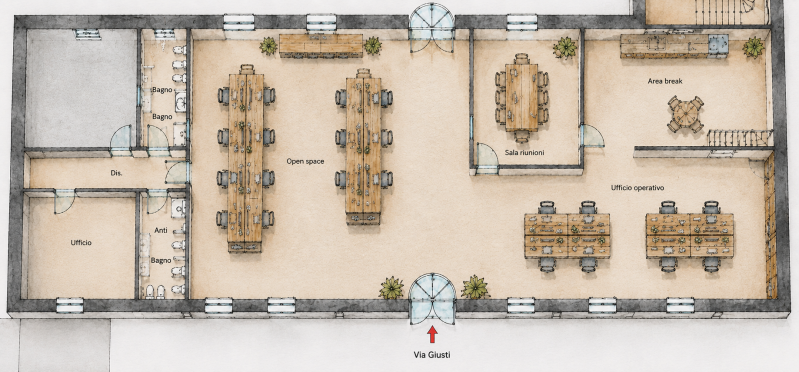
Example of layout
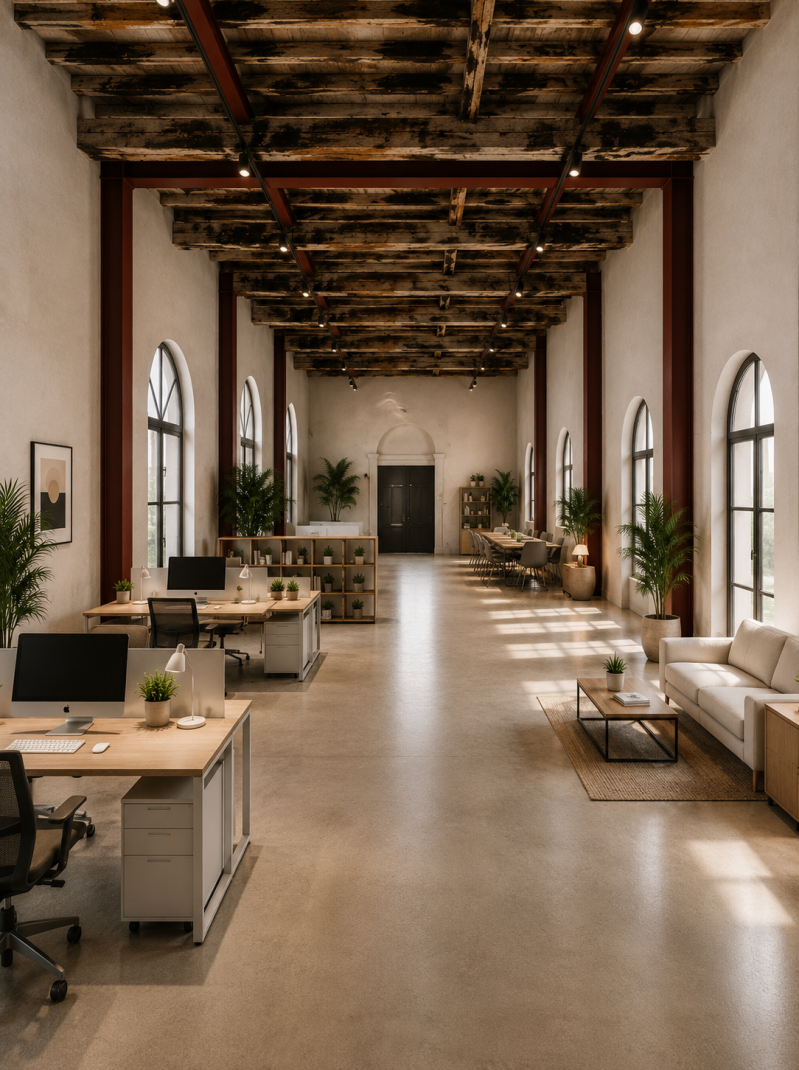
Ground Floor
C11 – 130 sqm unit
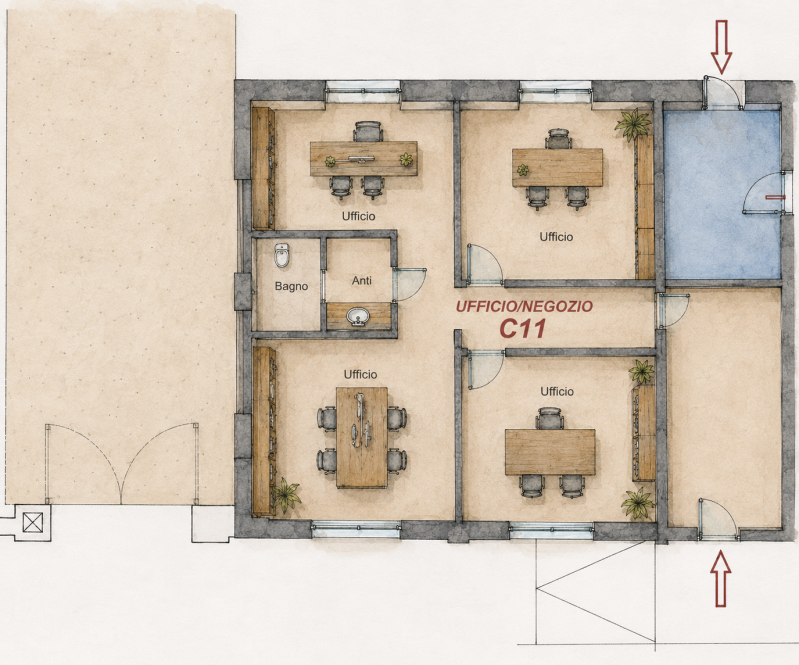
First Floor
C12 – 202 sqm unit
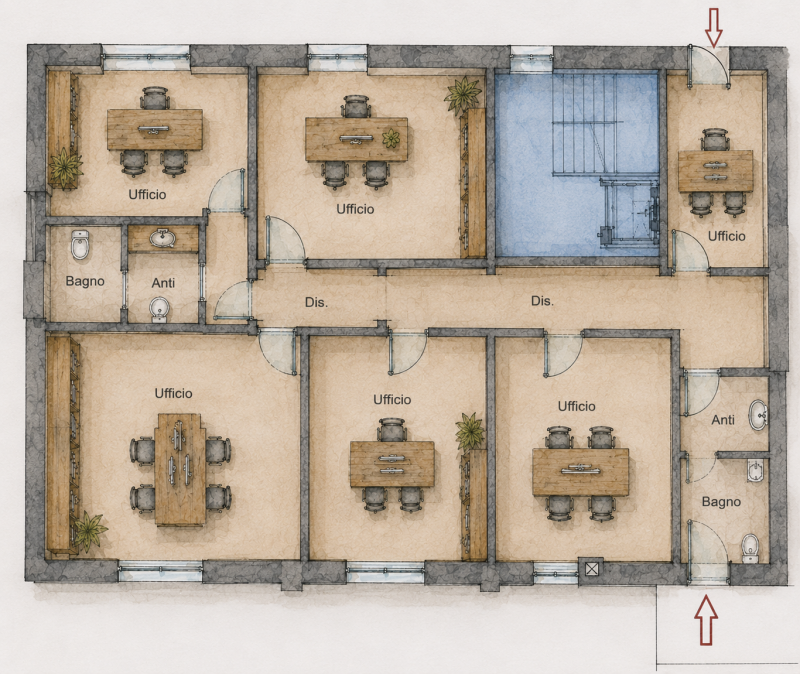
Second Floor
C13 – 330 sqm unit
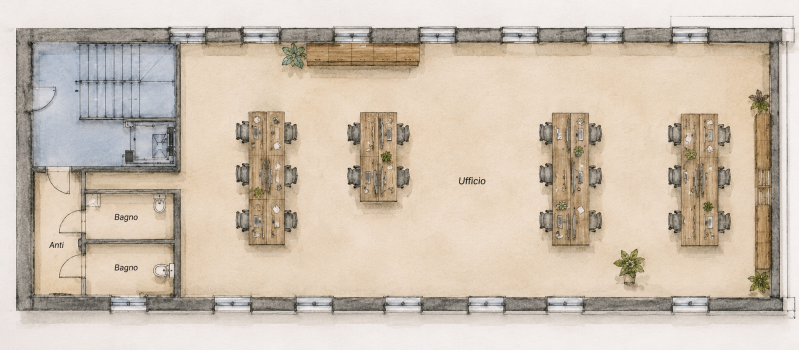
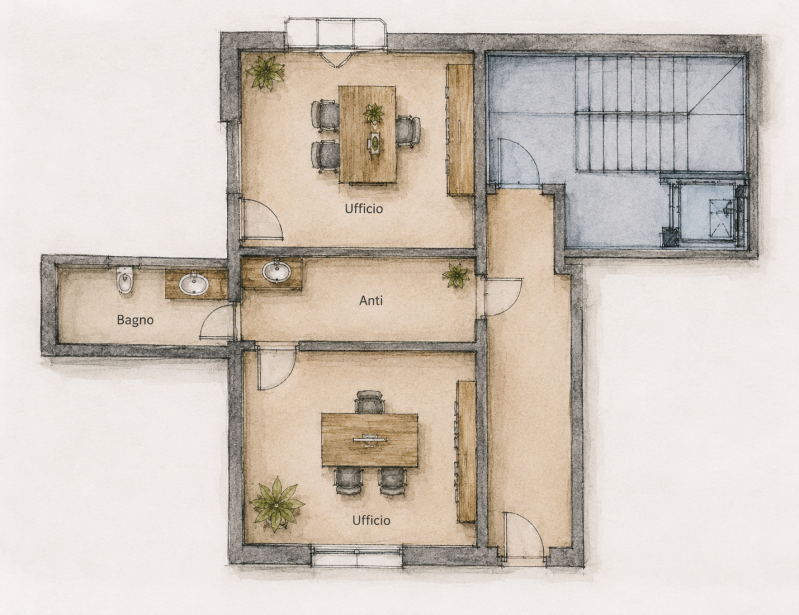
Second Floor
C13 – 330 sqm unit
2°) Office Space in the Tobacco Drying Barn
This distinctive building, offering approximately 600 sqm of space, is ideally suited for office use, hospitality and dining activities, conferences, exhibitions, or special events.

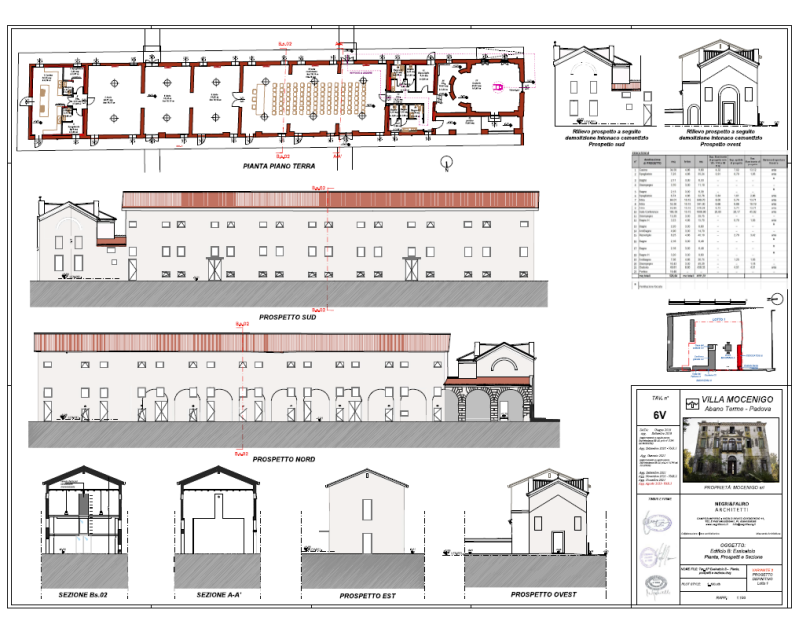
In the 19th century, the Sacerdoti family, having become the owners of the estate, established an important center for tobacco drying and processing, at a time when tobacco cultivation was widely practiced throughout the countryside of the Padua area.
The original Barchessa was subsequently elevated and converted into a tobacco drying barn, giving rise to this magnificent and imposing building. Its careful and inspired restoration has transformed it into a truly unique and captivating space, rich in character and atmosphere.
Essiccatoio - External building


Essiccatoio - Internal building


THE ORATORY
In the street-front portion of the Dryhouse there is a chapel/oratory, a small jewel.
The Oratory of Saint Anne is an aristocratic chapel (consecrated in 1708).

It was restored to its original splendour in the second half of the 20th century when commissioner Leonildo Mainardi and his wife Ersilia Bressanin bought the ruined villa and began renovation work.
Once used as a farmer's dwelling (it was turned into a synagogue when the property passed from the Mocenigo to the Trieste family of Jewish origin), the oratory dedicated to St. Anne (in honour of Mainardi’s mother was embellished with the elegant cobweb ceiling truss, 18th-century columns and a small apse, surmounted by a semi-dome, which houses the altar.
One must not overlook the memorial plaque to Giorgio Mainardi, a selfless and heroic soldier who died in the liberation struggle on 23 November 1943.
Almost two centuries after its initial construction, on 26 July 1972, the newly restored chapel was blessed in the presence of the authorities of Abano Terme.
